What is an advertisement?
An advertisement is a short persuasive text that makes a target audience want to buy, do or believe something. A print ad usually has eight parts: brand name, headline, image, logo, slogan, offer, body copy and a call to action.
Ads come in many forms, from billboards and radio jingles to movie trailers and social media posts. This guide focuses on the print advertisement, the kind you see in a magazine. It is text-heavy enough to give students real writing to do, and every technique in it carries over to digital ads.
On this page you’ll find three complete example ads with every part labelled, a six-step method for writing your own, the persuasive techniques advertisers use, 20 topic ideas, and a free ad planner to download.

Advertisement Examples (with Every Part Labelled)
Here are three complete print advertisement examples for students. Each one uses a different persuasive strategy, and the labels show what every part is doing.
| Technique | What it does | Example |
|---|---|---|
| Rhetorical question | Makes the reader answer in their head | “Still buying a plastic bottle every day?” |
| Direct address | Speaks to the reader as “you” | “You’ll never miss a wag.” |
| Emotive language | Makes the reader feel something | “Long workdays shouldn’t mean a lonely dog.” |
| Alliteration | Repeats a starting sound so it sticks | “Crunchy, chewy, chocolatey Choco Chunks.” |
| Repetition | Hammers home one idea | “Happy Dogs. Happy Owners.” |
| Rule of three | Creates rhythm | “Sip. Save. Repeat.” |
| Facts and statistics | Appeals to logic | “Over 150 plastic bottles a year.” |
| Testimonial | Lets a customer do the persuading | “Biscuit has never been happier!” |
| Bandwagon | Suggests everyone is already doing it | “Over 300 kids have already signed up.” |
| Scarcity and urgency | Pushes the reader to act now | “This month only.” “Spots are limited.” |
| Exaggeration (hyperbole) | Makes the product sound amazing | “The comfiest sneakers on the planet.” |
| Humor | Makes the brand likeable and memorable | “Our socks are so soft, your feet will write us a thank-you note.” |
Example 1: Breezy water bottle (problem/solution)
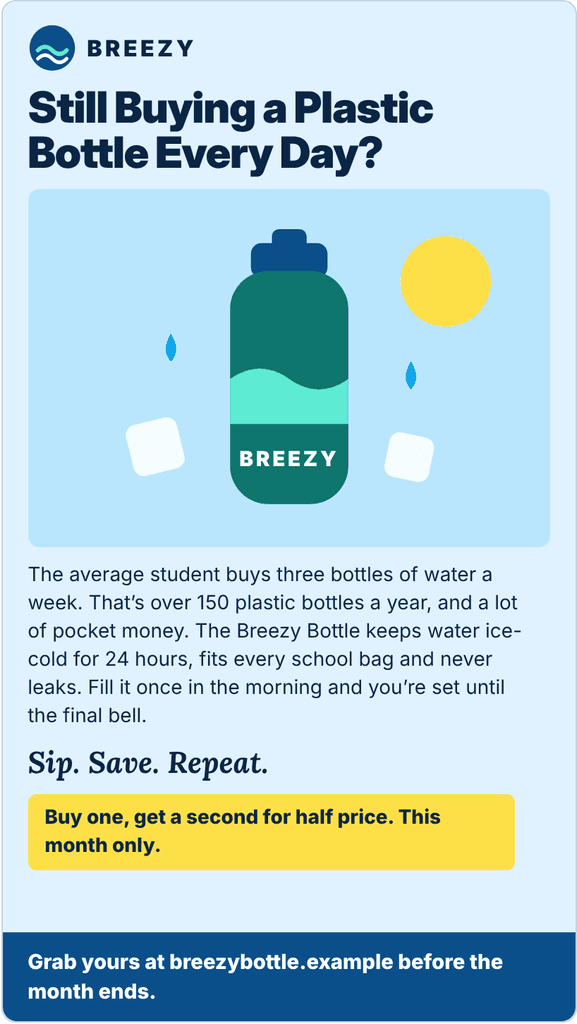
BREEZY Still Buying a Plastic Bottle Every Day? The average student buys three bottles of water a week. That’s over 150 plastic bottles a year, and a lot of pocket money. The Breezy Bottle keeps water ice-cold for 24 hours, fits every school bag and never leaks. Fill it once in the morning and you’re set until the final bell. Sip. Save. Repeat. Buy one, get a second for half price. This month only. Grab yours at breezybottle.example before the month ends.
| Part | In this ad | Why it works |
|---|---|---|
| Target audience | Students aged 10–16 and their parents | Every detail (school bag, pocket money, final bell) speaks to them |
| Headline | A question about a problem | The reader answers “yes” in their head and reads on for the solution |
| Body copy | Facts first, then benefits | “150 bottles a year” makes the problem real; “set until the final bell” is the benefit |
| Slogan | Three short verbs | The rule of three makes it rhythmic and easy to remember |
| Offer | Half-price second bottle | Gives a reason to buy two, one for a friend or sibling |
| Call to action | Where to buy, and by when | “Before the month ends” adds urgency |
Example 2: Paws & Go dog walking (testimonial)
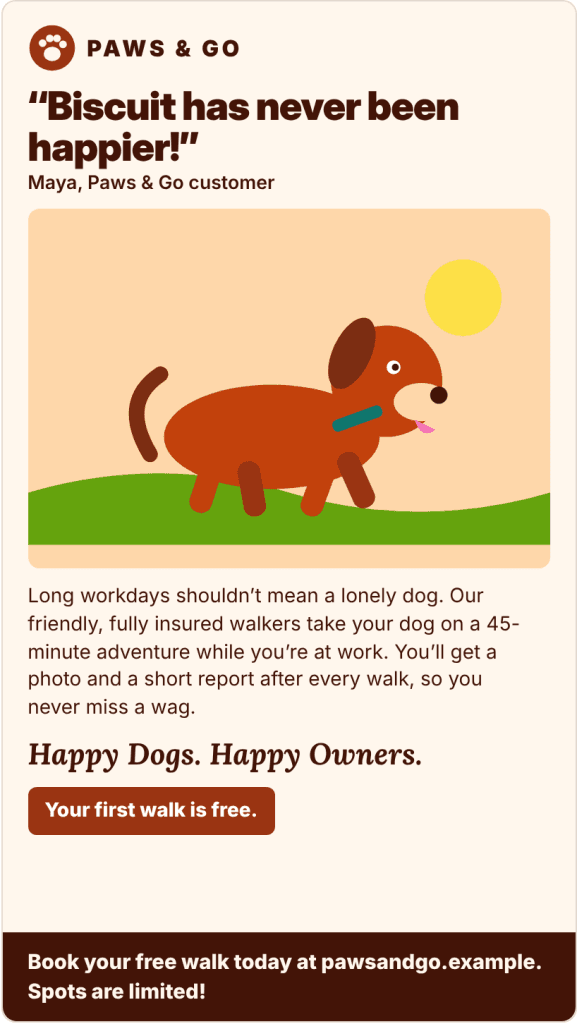
PAWS & GO “Biscuit has never been happier!” — Maya, Paws & Go customer Long workdays shouldn’t mean a lonely dog. Our friendly, fully insured walkers take your dog on a 45-minute adventure while you’re at work. You’ll get a photo and a short report after every walk, so you never miss a wag. Happy Dogs. Happy Owners. Your first walk is free. Book your free walk today at pawsandgo.example. Spots are limited!
| Part | In this ad | Why it works |
|---|---|---|
| Target audience | Busy working dog owners | The ad names their worry (a lonely dog) and fixes it |
| Headline | A customer quote | A real-sounding person is more believable than the company praising itself |
| Body copy | Emotional | “Lonely”, “adventure” and “never miss a wag” make the reader feel something |
| Slogan | Repetition and parallel structure | “Happy … Happy …” links the dog’s happiness to the owner’s |
| Offer | First walk free | Removes the risk of trying a stranger with your pet |
| Call to action | Book today, spots limited | Scarcity pushes the reader to act now rather than later |
Example 3: Greenfield Library Reading Challenge (bandwagon)
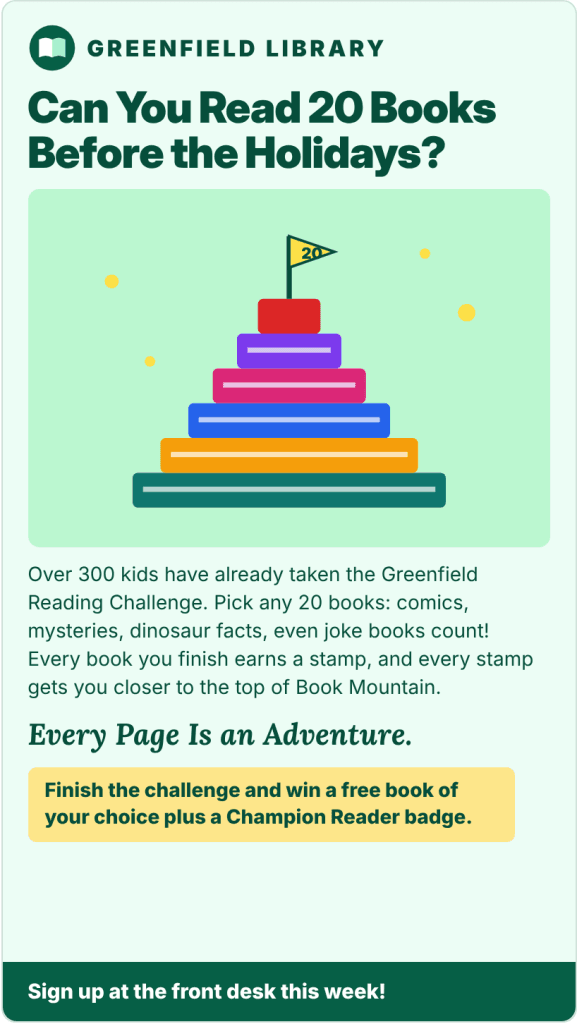
GREENFIELD LIBRARY Can You Read 20 Books Before the Holidays? Over 300 kids have already taken the Greenfield Reading Challenge. Pick any 20 books: comics, mysteries, dinosaur facts, even joke books count! Every book you finish earns a stamp, and every stamp gets you closer to the top of Book Mountain. Every Page Is an Adventure. Finish the challenge and win a free book of your choice plus a Champion Reader badge. Sign up at the front desk this week!
| Part | In this ad | Why it works |
|---|---|---|
| Target audience | Children aged 8–12 | Short sentences, an exclamation mark, fun book types |
| Headline | A challenge phrased as a question | Kids love proving they can do something |
| Body copy | Bandwagon, then a game | “Over 300 kids” says everyone is doing it; “Book Mountain” turns reading into a quest |
| Slogan | A metaphor | Turns reading into an adventure |
| Offer | A prize and a badge | A reward kids can show off |
| Call to action | Where and when to sign up | Simple enough for a child to do on their own |
PERSUASIVE TECHNIQUES TUTORIAL VIDEO (2:20)
How to Write an Advertisement in 6 Steps
Follow these six steps to write your own print advertisement. The free ad planner takes you through them on a single page.
- Get to know your product. List three features, then turn each into a benefit. “Keeps water cold for 24 hours” is a feature. “Ice-cold water at the end of sport” is the benefit, and benefits are what sell.
- Picture your target audience. Invent one real-feeling buyer: their age, what they care about, and what problem your product solves for them. Write every line for that one person.
- Choose your main persuasive strategy. Pick one big idea to lead with: problem and solution, a testimonial, bandwagon, an emotional appeal, or facts and figures. You can add other techniques later, but one strategy should run the whole ad.
- Write the headline and slogan. Draft five headlines and keep the strongest. Then write a slogan of six words or fewer that uses a sound device such as alliteration, rhyme or the rule of three.
- Write the body copy and the offer. Use three or four short sentences that sell benefits, not features. Finish with an offer that gives a reason to act now: a discount, a free trial or a prize.
- Add the call to action, then lay it out. Start the call to action with a verb (“Book”, “Grab”, “Sign up”) and say exactly where and when. Put the headline at the top, make the image the biggest thing on the page, and place the call to action where the eye finishes, usually the bottom right.
Planning a full advertising unit around these parts takes time. If you’d rather start with it ready, our Advertising & Media Literacy Unit has five sequenced lessons, organisers, posters and rubrics ready to teach ($12.50 on TpT). Otherwise, here’s how each part works.
The 8 Parts of an Advertisement
For students to create their own advertisements and successfully employ various persuasive techniques, they’ll first need to develop a clear understanding of an advertisement’s underlying structure.
We’ll explore the primary structural elements and features of advertisements, though the order in which these appear can vary from advert to advert. Here, we’ll take a look at the following persuasive text elements.
- Brand Name
- The Image
- Logo
- Call to Action
- The Offer
- Headline
- Slogan
- Body Copy

THE BRAND NAME AS A PERSUASIVE ELEMENT

The brand name of the product or service frequently comes at the top of the advertisement – though not always. One of the first tasks for students when writing their own advertisement is to decide on a name for their product or service.
Please encourage students to select a name that reflects the product, service, or values they wish to present to their audience.
Brand names have evolved from being wordy and aspirational to very short and snappy since the inception of the internet, so they can be found easily on a search engine.
BRAND NAME CONSIDERATIONS
- What are the names of similar already existing products or services?
- Does the name look and sound good?
- Is the name short, punchy, and memorable?
- Does it evoke a feeling or an idea?
- Is it distinctive and original?
THE AUDIENCE AS A PERSUASIVE ELEMENT

An advertisement’s target audience may not always be immediately apparent and often needs to be inferred through language and imagery choices made by the writer.
However, who the target audience does need to be decided before writing as it will inform subsequent choices on the use of language (e.g. pronouns, tone, etc.) and imagery.
There are several ways to help students determine their target audience.
A good starting place is to consider creating a target persona—a fictional character who represents the type of person their product or service is aimed at.
- Age
- Gender
- Location
- Hobbies
- Income
- Education level
- Occupation
- Marital status
- Likes/Dislikes
- Who they trust
- What they read/watch
An effective print advertisement presents a product or service in an appealing manner. It quickly conveys essential information about that product or service. It will include a clear and specific offer and also provide the information required for the reader to act on that offer.
Once we have the brand name sorted and the audience defined, it’s time to look at the critical structural elements to consider when writing an ad. It’s important to note that not every element will be used in every ad, but the following model serves well for writing most print advertisements.
THE HEADLINE AS A PERSUASIVE ELEMENT

The ad headline should provide a short, snappy preview of what the reader will find in the copy. A good headline grabs the potential customer’s attention and entices them to read the rest of the ad.
There are several tried-and-tested methods for writing a great headline. Here are three of the most effective:
The Problem/Solution Headline – This headline details a problem a potential customer may be facing and offers the solution in the form of the product or service. For example: Tired? Sluggish? Overweight? Excero Bike Gets You Where You Need to Go, Fast!
The Testimonial Headline – This headline uses a quote from a customer’s positive review to help sell the product or service. The testimonial allows the potential customer to see some ‘proof’ upfront before buying. “With the Excero Bike, I lost 15lbs in 15 days. I’m now thinner, fitter, and much, much happier!”
The Question Headline – This headline asks a question that the target customer will be seeking an answer to, for example, “Are you paying too much for your x?” Are You Paying Too Much for Your Gym Membership?
THE LOGO AS A PERSUASIVE ELEMENT

Logos are visual representations of a brand, used to promote a range of products and services under a single umbrella while allowing for quick recognition by the reader.
Though logos are primarily a design element rather than a writing one, they play a vital role in reinforcing brand identity and trust. A well-designed logo communicates the essence of a brand in a single glance, conveying professionalism, reliability, and values.
Logos are especially important in building consistency across various marketing materials, from advertisements to social media posts. They act as a visual anchor, helping consumers associate positive experiences with the brand.
Simple, memorable designs are often the most effective, ensuring the logo remains recognizable across different platforms and formats.
THE SLOGAN AS A PERSUASIVE ELEMENT

A slogan is a phrase or a short sentence used to represent or sell a particular brand.
Slogans are typically designed to be short and snappy, making them more memorable for readers. They often incorporate figurative language techniques like alliteration, rhyme, or puns to leave a lasting impression.
A well-crafted slogan distills the essence of a brand or product into a few impactful words, creating a connection with the audience and reinforcing brand identity.
Whether clever, emotional, or aspirational, a great slogan helps a brand stand out in a competitive market and stick in the minds of consumers.
THE OFFER AS A PERSUASIVE ELEMENT

A good print ad makes readers an offer. This is usually in the form of a benefit the potential customer will gain or a motivating reason for finding out more about the product or service.
The Offer acts as a ‘hook’ that maintains the reader’s focus and draws them into the body of the ad. It can be a time-limited discount or a 2-for-1 offer, etc. This Week Only – 25% Off!
Offers can also form part of the Call to Action at the end of the ad – more details on this soon.
THE BODY COPY AS A PERSUASIVE ELEMENT

Good body text (or body copy) in an ad is well-organized and quickly gets to the point. Readers want to obtain the necessary information with minimum effort.
For the writer, this requires skill, patience, and much editing. There are several different types of body copy that students need to consider when writing their ads. Let’s take a look at five of these:
Factual – Factual copy gives the reader just enough factual information about the product or service to persuade them that it’s worth buying.
Humor – Using humor is a tried-and-tested means of making an ad memorable. To use it successfully, students will need to have an excellent understanding of their target audience.
Narrative – This copy tells a story as a way to draw the customer in. Many people are resistant to direct selling. Narrative copy uses the power of storytelling to build a connection with the customer to ‘soft sell’ to them.
Testimonial – While testimonial content usually comes from a customer, it can also come from experts, celebrities, or any kind of spokesperson. The testimonial is based on what the customer or spokesperson liked about the product or service.
Testimonials are often woven into the humanity of the ad. This copy appeals to emotions. Rather than boasting directly of the benefits of the product or service, this type of ad evokes the senses and appeals to emotions.
The body copy might include details of available products or services, special offers, or specific information the advertiser wants potential customers to know. Subheadings and bullet points can help organize the text and make information easier to find.
Texts should be short and easy to read. Walls of text can be off-putting; if the language is too complex, it may turn off potential customers.
The Image as a Persuasive Element
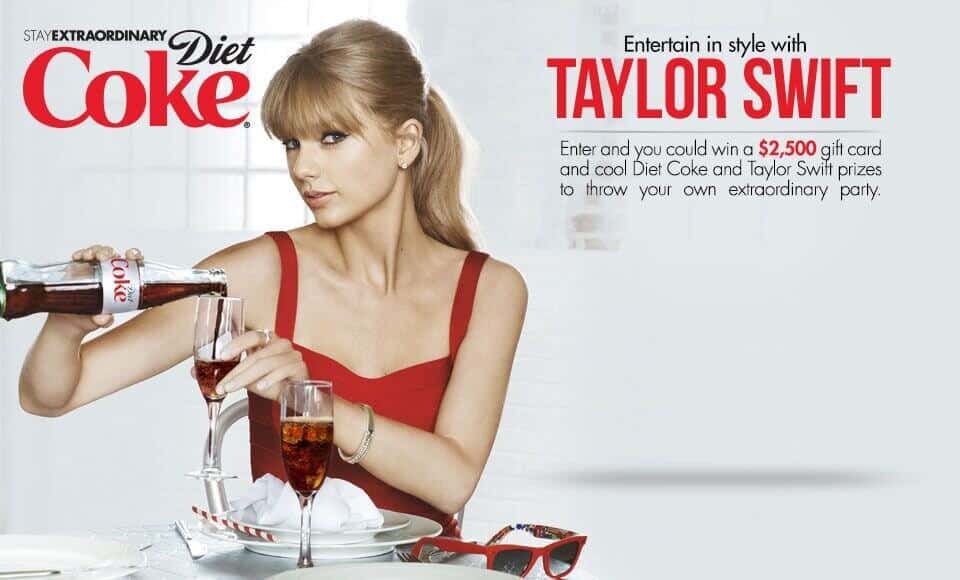
It’s a competitive world out there! Advertisements must catch and hold attention in an overwhelmingly noisy world, and images are a powerful means of doing this. Photos, pictures, diagrams, logos, color schemes – the visual look of an ad is as important as the text and, in some cases, more important!
Interesting images capture interest. They can intrigue the reader and encourage them to read the text they accompany.
Images also help the reader visualize the product or service offered. Advertising space can be expensive, and, as the old adage has it, a picture tells a thousand words. Images help advertisers make the most of their advertising real estate.
Students should carefully choose (or create) images to accompany their text. They should ensure that images are relevant and appropriate for their selling audience. They should look natural and genuine rather than posed.
Students can create their own images using their cell phones or graphic designer apps such as Canva.
THE CALL TO ACTION AS A PERSUASIVE ELEMENT

The Call to Action or CTA frequently comes at the end of the advertisement. It’s usually made up of a few sentences that invite the reader to take a specific action. This action might take the form of buying the product, sharing contact information, or, in the case of an online ad, clicking on a link to find out more about the product or service.
Call to action Contexts:
- An electronics company encouraging readers to buy their new computer
- A helpline requesting readers to call a number
- A political party urging readers to vote for them in an upcoming election
- A travel agent appealing to readers to book their next holiday through them
There are many ways to write a CTA but some effective strategies that are commonly used include:
- Start with strong action words urging the reader to take action, e.g. Join, Discover, Order, Subscribe, Buy, etc.
- Let the reader know precisely what you want them to do.
- Ensure the necessary contact details are included, e.g. address, email, website address, phone numbers, etc.
- Motivate the reader to take action through the use of promotional offers, e.g. Get 50% off or Book your free consultation today!
- Provide a reason to take action by communicating the benefits, e.g. Losing weight, Saving money, Performing better, etc.
- Use numbers to appeal to the reader, e.g. Save 20% on your next video, Now with 33% extra free! etc.
- Make your audience an offer they can’t refuse, e.g. Book Your School Marketing and Promotion Analysis today – No Strings Attached.
- Create a sense of urgency by limiting a special offer in some way, e.g. 25% off for the first 100 customers, Free T-shirt if booked today, Buy 2 get 1 free this month only, etc.
FREE Advertising Task Matrix
Looking for an engaging way to teach advertising concepts? Download our FREE Bloom’s Taxonomy Advertising Matrix, perfect for empowering students to explore the world of advertising at their own pace. Including activities for analyzing advertisements, evaluating persuasive techniques, and creating original campaigns.

Persuasive Techniques

The use of persuasive devices is an essential aspect of writing an advertisement. Our students must clearly understand the following strategies to confidently produce an advertisement that works.
ALLITERATION IN ADVERTISING
This is a literary device that involves the repetition of the initial letter or sound of consecutive words or words near each other. It’s more commonly associated with poetry than nonfiction text types; however, it is also a popular technique used in advertising. Alliteration can help make brand names more memorable. Examples abound, e.g. PayPal, Coca-Cola, Range Rover, and Krispy Kreme, to name but a few.
It’s not just in company names that you’ll find alliteration at work, though. We can also see alliteration alive in slogans such as:
The best four by four by far – Land Rover
Made to make your mouth water – Opal Fruits
Greyhound going great – Greyhound
Don’t dream it. Drive It. – Jaguar
EMOTIVE LANGUAGE
Using emotive language involves deliberately choosing words to provoke an emotional response in the reader. Different ways exist to express the same idea.
We can choose to put a positive, neutral, or negative spin on the same event through the words we select. For example:
Positive: She triumphed gloriously against stiff competition in the spelling bee.
Neutral: She won the spelling bee.
Negative: She received first prize in the poorly attended minor-league spelling bee.
Asking questions can help to engage the reader and persuade them to come to the desired conclusion by themselves. This is the ad equivalent of the ‘show, don’t tell’ mantra employed by fiction writers.
As with all techniques and strategies, this must be used carefully. If used carelessly, it can have the opposite of the desired effect, such as building resistance in the reader.
Students should avoid making hyperbolic suggestions with their rhetorical questions. For example, the question, “Want to lose 50 lbs in 2 weeks?” implies a highly exaggerated claim that most intelligent readers will not believe. In this instance, the rhetorical question detracts from the ad’s effectiveness rather than enhances it.
The most important thing for students to remember when using this technique is that they should only ask rhetorical questions in their ads when they can predict with a reasonable degree of certainty what the answer will be in the reader’s mind.
Nine times out of ten, that answer should be a simple “yes.” Questions should be straightforward, as should the answers they generate.
REPETITION

Advertisers know that we usually need to see or hear things several times before we’ll remember them. Also, the reader is more likely to believe something true the more frequently they hear it. For these reasons, advertisements rely heavily on repetition to drive their message home.
In advertising, the repetition of certain keywords or phrases is used to emphasize a specific idea or emotion. When used well, it can increase the overall effectiveness of an ad. However, students should be careful not to bore the reader. Repetition should always be used strategically.
Repetition doesn’t just involve the repeating of words. It can also include repeating colors and images.
Here are some examples of repetition at work.

Advertising Tips for Students
- Sell the benefit, not the feature. People buy what the product does for them.
- One ad, one message. If you try to say five things, the reader remembers none.
- Say “you” more than “we”. The ad is about the reader, not the company.
- Keep it short. Aim for 40–80 words of body copy. Cut “very”, “really” and anything the image already shows.
- Make the headline do the heavy lifting. Most readers decide whether to keep reading from the headline alone.
- Read your slogan aloud. If it doesn’t have rhythm, rework it.
- Be honest. Don’t claim what you can’t prove. “The best in the world” invites the question “says who?”
- Test it on your audience. Show it to someone your ad is aimed at and ask what they would do next. If they can’t tell you, your call to action needs work.
20 Advertisement Topics for Students
Invented products and causes make the best topics for a first ad, because there’s no famous slogan to copy.
| Products | Services | Events | Causes |
|---|---|---|---|
| A backpack that charges your phone | A student-run bike repair shop | The school fair | Turn off lights to save energy |
| A breakfast cereal for sporty kids | A homework help club | Sports day | Adopt a shelter pet |
| Sneakers made from recycled plastic | A weekend car wash fundraiser | Book week costume parade | Keep the beach litter-free |
| A robot that tidies your bedroom | A dog-walking business | The school play | Walk or ride to school |
| An app that reminds you about homework | A pet-sitting service | A science fair |
Teaching Advertising: A 5-Lesson Sequence
If you’re planning an advertising unit, this five-lesson sequence takes students from reading ads to writing their own.
- What makes an ad work? Students collect print ads and label the eight parts on each one.
- Persuasive techniques. Compare two ads for the same kind of product aimed at different audiences. What changes, and why?
- Images and visual persuasion. Analyze how color, layout and image choice steer the reader’s eye.
- Copywriting. Draft headlines, slogans, body copy and an offer using the six steps above.
- Create, present and reflect. Students publish an ad, peer-review it against a checklist and discuss the ethics of marketing.
How to Write an Advertisement: FAQ
What are the 8 parts of an advertisement? A print advertisement usually has eight parts: a brand name, a headline, an image, a logo, a slogan, an offer, body copy and a call to action. Before writing any of them, decide on your target audience. It isn’t printed on the ad, but it shapes every part of it.
How do you make an advertisement for a school project? Choose a product, ideally one you invent so there’s no famous slogan to copy. Then decide who the ad is for and pick one main persuasive strategy. Write a headline, a short slogan, three or four sentences of body copy and an offer that gives a reason to act now. Finish with a call to action that starts with a verb, and lay it out with the image as the biggest thing on the page. Our free ad planner walks you through each step on one page.
What persuasive techniques are used in advertisements? The most common are rhetorical questions, direct address (“you”), emotive language, alliteration, repetition, the rule of three, facts and statistics, testimonials, the bandwagon effect, scarcity and urgency, exaggeration and humor. Most ads combine three or four of them. The table above gives an example of each.
How long should an advertisement be? Shorter than most students expect. A strong print ad has a headline of fewer than ten words, a slogan of six words or fewer, and 40–80 words of body copy. If a sentence doesn’t make the reader want the product more, cut it.
What is the difference between an advertisement and a persuasive essay? Both aim to persuade, but they work differently. An advertisement is short and visual, and it combines images and words to get the reader to buy or do something now. A persuasive essay builds an argument over several paragraphs, with reasons and evidence for a point of view. See our guide to writing persuasive essays.
What makes an advertisement effective? One clear message aimed at one audience. Effective ads sell benefits rather than features, grab attention with the headline, and make the next step obvious with a specific call to action. Avoid claims you can’t prove: readers trust an ad less when it promises too much.
What is a good topic for an advertisement? Invented products and causes work best for students, such as a backpack that charges your phone, a homework club or a campaign to adopt shelter pets. Our list of 20 advertisement topics for students has more ideas.
Want students to create a product and market it? The Advertising & Marketing Bundle pairs this unit with a project-based marketing unit where students design a breakfast cereal and sell it to their ideal customer.
PERSUASIVE VOCABULARY
Vocabulary can elicit an emotional response beyond the literal meaning of the words used. When students understand this, they understand a powerful tool of persuasion.
- Quality: premium, finest, ultimate, superior, handcrafted
- Value: free, bonus, save, bargain, half price
- Urgency: now, today, hurry, limited, last chance
- Feeling: irresistible, delicious, amazing, unforgettable
- Trust: guaranteed, proven, trusted, award-winning

PERSUASIVE ADVERTISING STRATEGIES

The Pain Solution: Persuades by highlighting a problem and suggesting a solution.
The Bandwagon: Persuades to do, think, or buy something because it is popular or because “everyone” is doing it.
The Testimonial: Persuades by using a previous customer or famous person to endorse a product or idea.
The Logical Appeal: Persuades by using reason, usually in the form of a claim backed by supporting evidence.
The Emotional Appeal: Persuades using words that appeal to emotions instead of logic or reason.
The Youth Appeal: Persuades by suggesting you’ll feel younger and more energetic using this product or service.
The Romantic Appeal: Persuades the reader by invoking the powerful and inspiring feelings of love.
The Empathy Appeal: Persuades the reader by encouraging them to identify with the plight of another.
PERSUASIVE DEVICES TUTORIAL VIDEO

Ready to teach it? Get the complete Advertising & Media Literacy Unit on TpT ($12.50), with lessons, posters and rubrics for grades 5–9.